
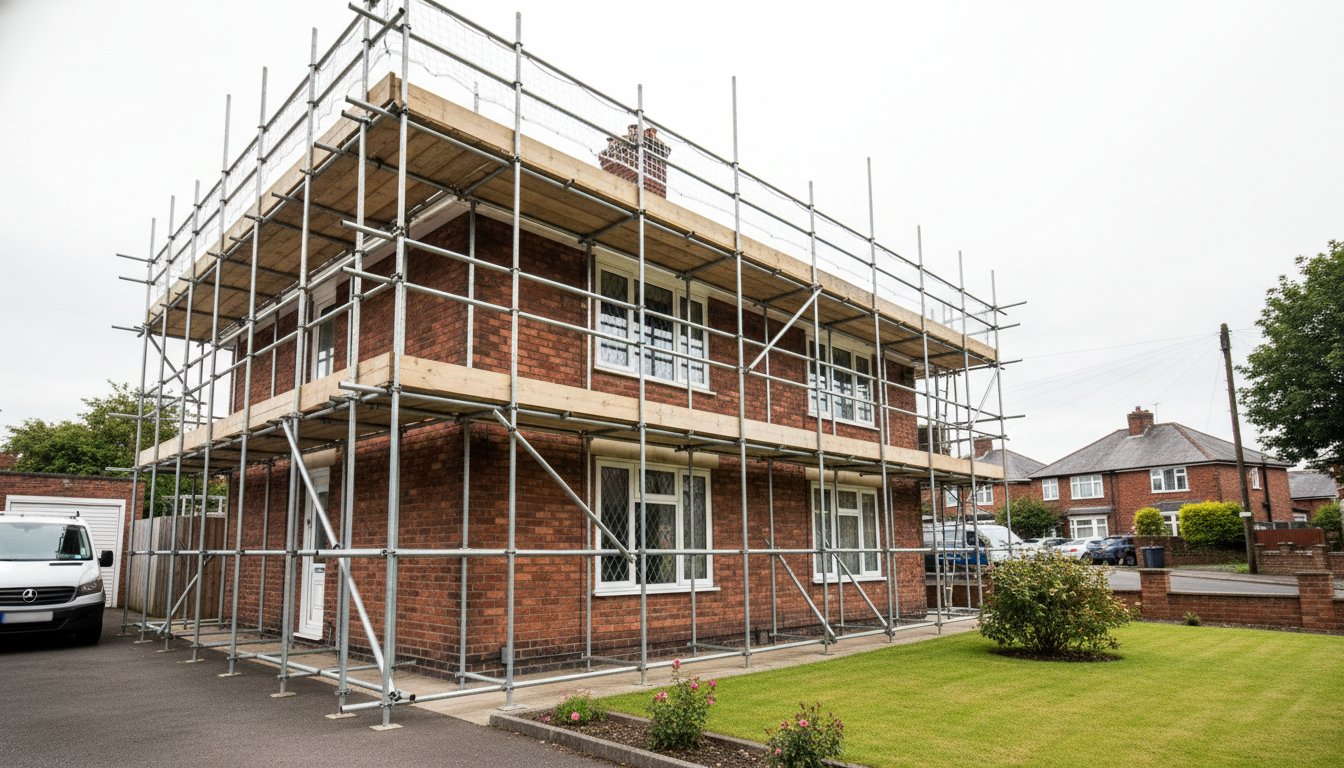
The safety of your roof or chimney stack depends entirely on the stability of the structure beneath it, yet many homeowners treat scaffolding as a mere afterthought. Choosing the wrong provider for your domestic scaffolding Wigan project isn’t just a minor inconvenience. It’s a direct risk to your property’s structural integrity and your legal liability. You likely feel a sense of dread at the thought of heavy steel poles leaning near your windows or the potential for garden damage. It’s natural to worry about cowboy contractors ignoring safety standards or the confusion surrounding local council permits.
We understand that you want your home improvements to proceed without unnecessary noise or neighbour disputes. This guide provides everything you need to ensure your project remains safe, legal, and stress-free. We’ll explain the mandatory Wigan Council permit fees for 2026, which currently stand at £160.00 for a standard 28-day period, and the latest CISRS inspection standards that protect your household. You’ll learn how to identify a competent contractor who respects your property, ensuring your renovation moves forward with total peace of mind.
Key Takeaways
- Understand the legal obligations under HSE guidelines that make professional scaffolding a mandatory requirement for any work at height on your property.
- Explore various residential solutions, including roof and edge protection, designed to provide secure access for complex tasks like chimney maintenance or gutter replacements.
- Identify elite safety benchmarks by looking for CISRS qualifications and Construction Line Gold status, which signify a commitment to the highest industry standards.
- Navigate the logistics of your domestic scaffolding Wigan project by learning how to secure mandatory pavement licences and communicate effectively with your neighbours.
- Recognise the benefits of partnering with Garswood Scaffolding Ltd, a long-standing, family-run enterprise that combines deep local knowledge with rigorous safety protocols and expert precision.
What is Domestic Scaffolding and Why is it Essential?
Domestic scaffolding refers to temporary access structures specifically engineered for residential environments. Unlike industrial sites, home projects often involve navigating narrow driveways, delicate garden features, or neighbouring boundaries. To understand the technical components of What is Scaffolding, it’s helpful to view these structures as bespoke safety systems rather than just a collection of poles. For homeowners planning domestic scaffolding Wigan projects, these structures provide the primary defence against falls and property damage. The Health and Safety Executive (HSE) mandates that all work at height must be properly planned and supervised. While a simple mobile tower might suffice for a small gutter clean, bespoke residential designs are essential for chimney stacks or multi-storey extensions where stability and load-bearing capacity are paramount.
When do you actually need scaffolding for your home?
Scaffolding becomes a necessity whenever a task cannot be performed safely from the ground or a stable internal platform. Roofing repairs and full re-roofs are the most common examples, as they require robust edge protection to prevent falls. If you’re planning external rendering, pebble-dashing, or painting, a full scaffold wrap provides a continuous platform. This allows tradesmen to work efficiently without constant repositioning. Modern upgrades, such as solar panel installations or high-level window replacements, also demand the secure access that only a professional structure can provide. In Wigan’s varied housing stock, from traditional terraced rows to modern detached builds, the right scaffold ensures that every corner of the property is accessible to your contractors.
The risks of using ladders for high-level work
Ladders are designed for low-risk, short-duration tasks only. They are inherently unstable for complex projects like roof repairs, where workers need to use both hands and carry heavy materials. Working from a ladder for extended periods is physically exhausting and significantly increases the risk of a fall. Perhaps more importantly, homeowners have a duty of care to anyone working on their property. If a tradesman uses inadequate equipment and suffers an injury, you could face serious liability issues and legal complications. Professional domestic scaffolding Wigan services eliminate this risk by providing a compliant, stable environment that adheres to the Work at Height Regulations 2005. It’s a small investment that protects your project, your property, and your peace of mind.
Types of Residential Scaffolding Solutions for Wigan Homeowners
Every residential property in Wigan presents unique architectural challenges. From red-brick Victorian terraces to sprawling modern detached homes, no two projects are identical. Choosing the right configuration for your domestic scaffolding Wigan project ensures that tradespeople can work efficiently while your property remains undamaged. Traditional tube and fitting scaffolding remains the most versatile choice for the borough’s older housing stock. This method allows our engineers to build around awkward shapes, bay windows, or tight alleyways that modern modular systems simply cannot accommodate.
Roof access and chimney scaffolding
Working on a chimney stack requires more than just a standard platform. We utilise “saddle” scaffolds that sit securely over the ridge of your roof. This provides a stable 360-degree working area for repointing or leadwork. Edge protection is equally vital for any roofing project. By installing handrails and toe boards around the perimeter, we ensure that roofers can move freely without the risk of a fall. If you’re planning a complex renovation, our team can design bespoke Roof Access Solutions tailored to your property’s specific layout.
Safety decking and crash decking for extensions
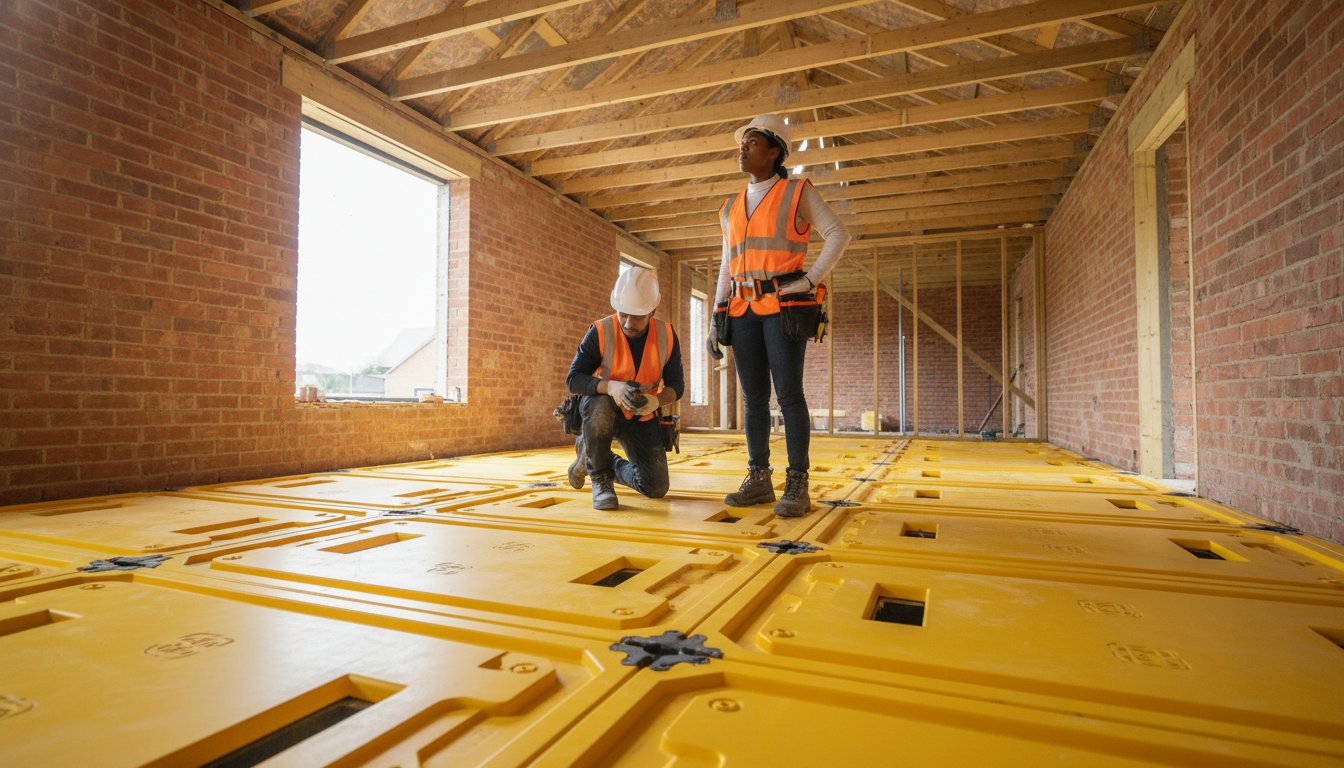
While external scaffolding is a visible necessity, internal safety decking is often overlooked by less experienced contractors. Crash decking is a lightweight, high-strength internal platform used during the construction of house extensions. It provides essential fall-through protection for bricklayers and joiners working above the first-floor joists. This system is a core component of compliant UK scaffolding rules, as it prevents serious injury during the most vulnerable stages of a build. By installing these platforms, you allow different trades to work simultaneously on different levels, which helps keep your project on schedule.
Specialist access: Skylights and fragile roofs
Many Wigan homes feature conservatories or glass extensions that cannot support the weight of traditional scaffolding legs. In these scenarios, we use bridge scaffolds or “spans.” These structures use heavy-duty beams to leap over delicate glass roofs, providing access to the main house wall without ever touching the fragile surface below. We also provide dedicated skylight protection systems. These covers prevent tools or debris from falling through expensive roof lights during a renovation. Whether you require a temporary roof for a total renovation or specific domestic scaffolding Wigan services for a chimney repair, selecting a structure designed for your home’s specific vulnerabilities is the only way to guarantee safety.
Safety First: Why Accreditations and CISRS Training Matter
Safety in the scaffolding sector isn’t merely about following a checklist. It’s about a deep-rooted commitment to technical precision and risk management. When you hire for domestic scaffolding Wigan, you’re trusting a team with the structural integrity of your home. This is why looking for specific accreditations is the only way to separate professional enterprises from unqualified “cowboys.” High-risk work requires a “safe pair of hands” that prioritises procedural correctness above all else.
The value of a CISRS-qualified team
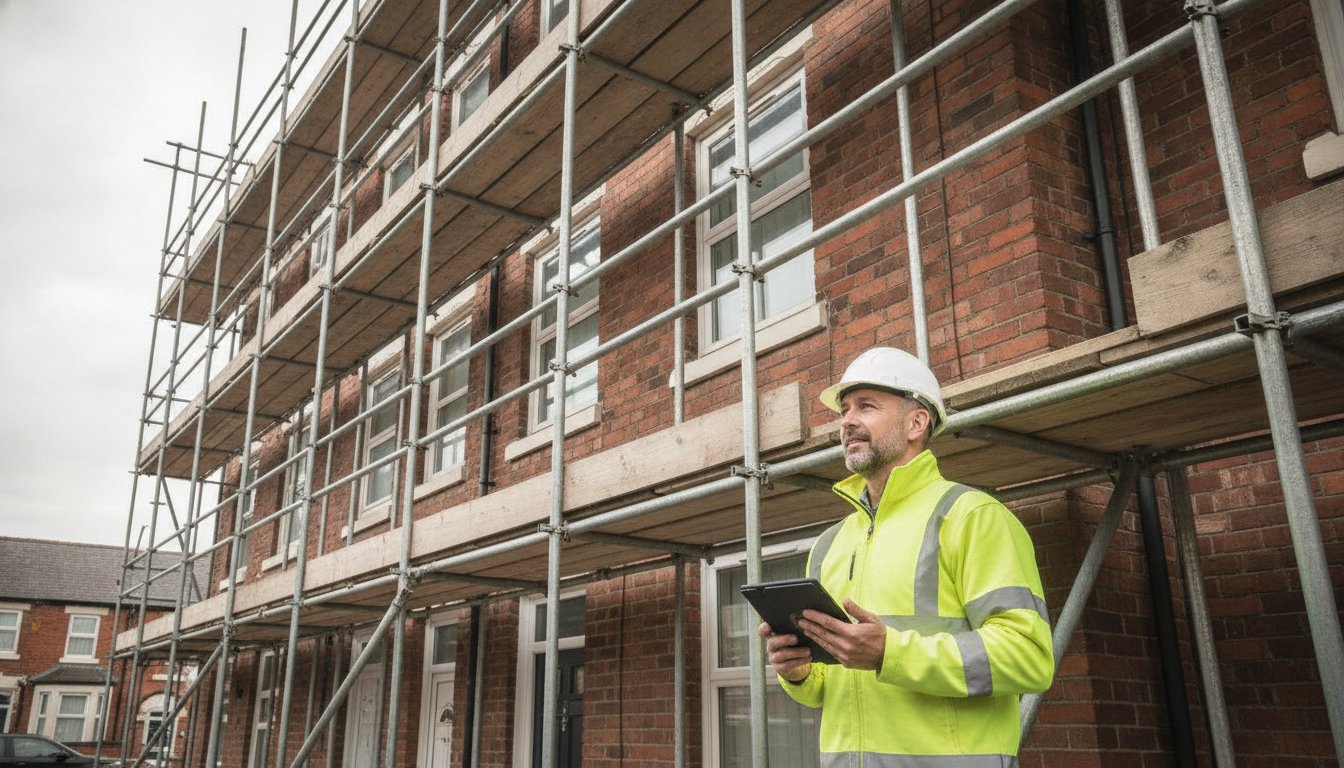
The Construction Industry Scaffolders Record Scheme (CISRS) is the industry standard for competency. Every operative on your property should carry a valid CISRS card, which proves they’ve undergone years of rigorous training and practical assessment. As of June 2026, entry criteria for scaffold inspection training have been immediately tightened to ensure higher safety benchmarks across the UK. You should never allow uncertified “labourers” to lead a domestic scaffold erection. Qualified scaffolders understand how to tie a structure to your building’s specific masonry without causing damage, ensuring it can withstand high winds and heavy loads whilst protecting the public.
Understanding Construction Line Gold and Simian
Construction Line Gold status is a mark of elite safety management that goes far beyond basic health and safety checks. It signifies that a company has been thoroughly vetted for its environmental standards, quality management, and financial stability. For a Wigan homeowner, this means you’re partnering with a stable, professional business that values tradition and integrity. To maintain these standards, many top-tier firms work with Simian, a leading safety consultancy. Simian conducts regular, independent audits to ensure 24/7 compliance with the latest National Access & Scaffolding Confederation (NASC) guidelines. These audits are crucial for identifying potential hazards before they lead to site accidents.
Insurance and public liability
The most common fear for homeowners is property damage. Whether it’s a dropped tool or a pole scratching a neighbour’s car, the financial implications can be significant. A reputable firm providing domestic scaffolding Wigan must hold comprehensive public liability insurance, typically with a minimum cover of £5 million. You shouldn’t feel awkward asking to see a current insurance certificate before work begins. If a company can’t provide this, they aren’t a trustworthy partner. Professional firms provide this documentation upfront to give you peace of mind that your liability is protected. By choosing an accredited partner, you ensure that safety isn’t just a promise, but a verified standard of operation.

Preparing Your Property: A Homeowner’s Checklist
Success for any domestic scaffolding Wigan project depends on meticulous preparation before the first pole arrives on site. Whilst the technical erection is our responsibility, homeowners play a vital role in ensuring the site is ready for a safe installation. Proper planning prevents property damage and ensures compliance with local regulations, keeping your project on track and within budget. It’s a disciplined approach that separates a professional renovation from a chaotic one.
Licences and local authority permits
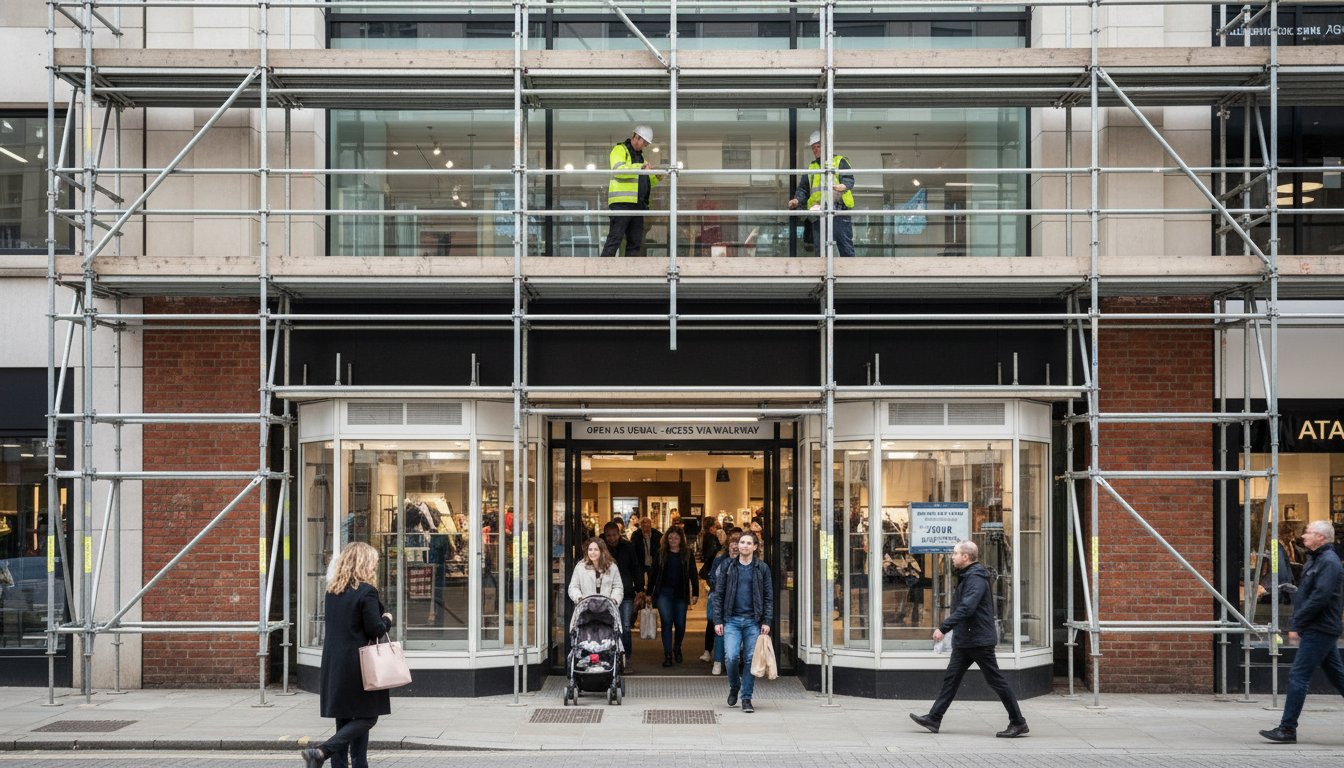
You must obtain a permit if any part of the scaffold sits on a public pavement or highway. For the 2026/27 period, Wigan Council charges a mandatory fee of £160.00 for a 28-day permit. Properties located within Wigan Town Centre are subject to a higher fee of £212.00 for the same duration. Whilst a professional contractor typically manages the application process, the legal responsibility for ensuring a permit exists often rests with the property owner. Always ask for a copy of the approved licence before work commences. If the project exceeds 28 days, you’ll need to arrange a renewal to avoid penalties and potential legal action from the local authority.
Protecting your property and garden
Scaffolding equipment is heavy; a single standard can exert significant pressure on your driveway or lawn. We use timber sole boards under every upright to distribute this weight and prevent sinking or cracking. You should clear the “drop zone” by moving vehicles, hanging baskets, and garden furniture at least two metres away from the building’s perimeter. This provides a clear workspace and eliminates the risk of accidental impact during the unloading phase. For homes with modern UPVC windows or decorative guttering, we take extra care to ensure no metal components come into direct contact with these surfaces. If you have specific concerns about your landscaping, you can request a site survey to discuss tailored protection strategies.
Neighbourly relations and site conduct
Scaffolding can be intrusive, especially if it limits a neighbour’s light or access. It’s best practice to inform your neighbours of the start date and expected duration of the work at least a week in advance. Most domestic installations begin early in the morning to ensure the structure is secure before the main trades arrive. Professional teams maintain a disciplined environment, avoiding the loud music or inappropriate behaviour often associated with “cowboy” outfits. Security is another key consideration; the presence of a scaffold can sometimes affect your home insurance coverage. We recommend checking with your provider to see if they require specific security measures, such as scaffold alarms or dusk-to-dawn lighting, to maintain your policy whilst the structure is in place.
Why Garswood Scaffolding Ltd is Wigan’s Trusted Choice
Selecting a contractor for domestic scaffolding Wigan involves finding a partner that understands the borough’s specific housing stock and regulatory landscape. Garswood Scaffolding Ltd positions itself as a stable, expert guide for homeowners. We manage every technical detail from the initial design and risk assessment through to the final dismantling of the structure. This comprehensive service ensures your project remains compliant with all current safety benchmarks without placing an unnecessary administrative burden on your schedule.
40 years of service in Wigan and the North West
Our enterprise is rooted in Ashton-in-Makerfield, providing over four decades of dedicated service to the local community. Being a family-run business means we take a personal interest in maintaining our reputation for integrity and precision. We’ve spent forty years navigating the complexities of local building styles, ensuring that every structure is tailored to the specific needs of the property. This deep-rooted experience allows Garswood Scaffolding Ltd to provide a level of reliability that only decades of local work can produce. We understand the local terrain and the unique challenges presented by Wigan’s varied residential architecture.
Our commitment to local safety
We don’t simply meet industry standards; we set them through elite accreditations including Construction Line Gold and Simian auditing. Garswood Scaffolding Ltd provides essential safety decking and roof access solutions that protect both tradespeople and residents throughout the build. We also understand that structural issues don’t always happen during office hours. Our team provides 24/7 emergency cover across Wigan, St Helens, and Leigh for urgent repairs or storm damage. Contact Garswood Scaffolding Ltd for a safe, professional quote today and ensure your home is supported by the region’s most experienced specialists.
Securing Your Home Improvement Project with Confidence
Ensuring the success of your renovation starts with choosing a partner that values technical precision and safety above all else. You now understand the importance of CISRS qualifications and the specific permit requirements that govern domestic scaffolding Wigan projects. By following a structured preparation checklist, you can protect your property and maintain positive relations with your neighbours whilst the work is underway. It’s about doing things the right way from the very first board to the final dismantle.
Garswood Scaffolding Ltd offers the stability of over 40 years of local experience. As a Construction Line Gold accredited firm with a CISRS qualified team, we provide a disciplined approach to every residential structure. Whether you need standard roof access or 24/7 emergency support for urgent storm damage, our experts are ready to assist. Get a Free Domestic Scaffolding Quote in Wigan today to discuss your requirements with a trusted local specialist. Your home is your most valuable asset; entrusting it to a seasoned guide ensures that your improvements are completed safely and with total peace of mind.
Frequently Asked Questions
Do I need a permit for scaffolding on my own driveway in Wigan?
You do not require a local authority permit if the scaffolding is erected entirely on your private property, such as a driveway or garden. Permits are only mandatory when the structure encroaches on a public highway or pavement. If your project requires any part of the scaffold to sit on public land, our team will manage the application with Wigan Council on your behalf to ensure full legal compliance.
How long can I hire domestic scaffolding for?
Hire durations are entirely flexible and tailored to the specific requirements of your project. Whilst many residential projects operate on a standard four to eight-week hire period, we can accommodate shorter maintenance tasks or long-term structural renovations. We provide clear, fixed-term agreements and can easily arrange extensions if your project timeline changes due to weather or material delays.
Will the scaffolding damage my house or garden?
A professional installation is designed to protect your property, not damage it. We utilise timber sole boards under every upright to distribute the weight and prevent the structure from sinking into lawns or cracking driveways. Our CISRS-qualified teams handle all materials with precision, ensuring that metal poles and boards do not come into direct contact with your windows, guttering, or decorative masonry.
How much does domestic scaffolding hire cost in the North West?
The investment required for domestic scaffolding Wigan depends on several technical factors, including the height of the building, the number of working lifts required, and the complexity of the roofline. Prices reflect the bespoke nature of each structure and the labour involved in a safe erection. We recommend a site survey to provide an accurate, transparent quote that accounts for your specific access needs and safety requirements.
Do I need to tell my insurance company I have scaffolding up?
It is essential to notify your home insurance provider before the scaffolding is installed. Most insurers require notification because the presence of a scaffold can alter the security profile of your property. Informing them ensures your policy remains valid whilst the work is carried out. You should also verify that your chosen contractor holds a minimum of £5 million in public liability insurance to protect your assets.
What is the difference between a scaffolder and a labourer?
The primary difference lies in professional qualification and technical responsibility. A qualified scaffolder holds a valid CISRS card, proving they have completed rigorous safety training and practical assessments. They are authorised to lead the erection, alteration, and dismantling of structures. A labourer provides essential support by moving materials but does not have the legal qualification to sign off on the safety and stability of the scaffold.
How much notice do I need to give for scaffolding erection?
For most residential projects, providing seven to fourteen days’ notice allows us to schedule a site survey and allocate the necessary equipment. This lead time is also vital if your project requires a pavement licence from the local authority, as permit processing times can vary. However, if you require urgent assistance for storm damage or structural failures, we prioritise rapid response through our emergency cover service.
What happens if the scaffolding is damaged during a storm?
If you suspect that high winds or a storm have compromised the stability of the structure, you must not use the scaffold. It is a legal requirement under the Work at Height Regulations 2005 to have the structure inspected by a competent person after any adverse weather event. Our team provides 24/7 support to conduct these inspections and perform any necessary remedial work to ensure the site remains safe for use.



Leave A Comment