
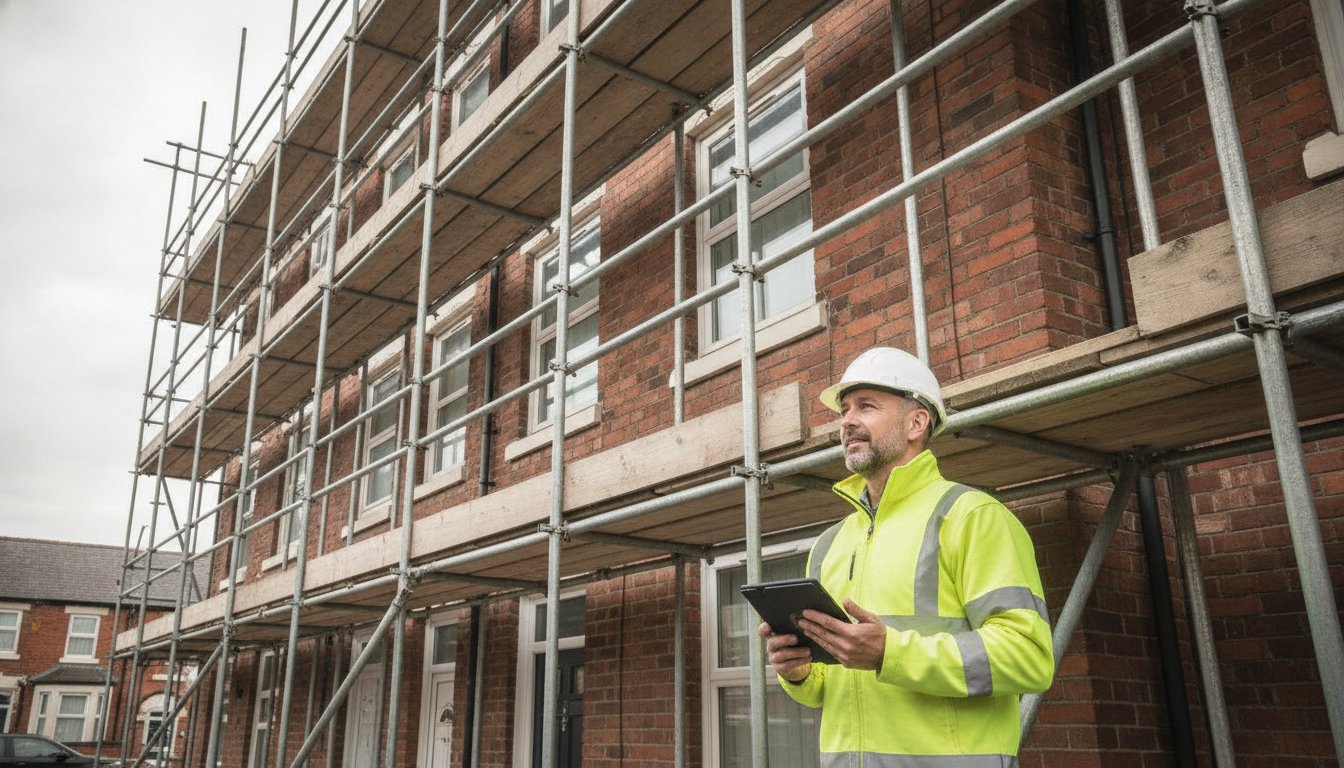
With a reported shortage of 40,000 skilled workers across the UK scaffolding sector in 2026, the risk of hiring underqualified contractors has reached a critical point. You aren’t merely sourcing equipment; you’re commissioning a high-risk engineering service that demands absolute precision. Understanding how to choose a scaffolding company is the most vital step you’ll take to ensure your project remains safe, legal, and within budget.
It’s understandable to feel concerned about unreliable “cowboy” scaffolders or the complexity of the Work at Height Regulations 2005. You need the peace of mind that comes from a contractor who is fully insured and transparent about their pricing. This guide will master the art of vetting providers by focusing on essential credentials like CISRS competency and NASC membership. We will explain how to verify public liability coverage and navigate the latest safety standards, ensuring you secure a stable and compliant partner for your build.
Key Takeaways
- Understand your legal obligations under UK health and safety law to ensure you aren’t held liable for site accidents or property damage.
- Master how to choose a scaffolding company by verifying essential industry accreditations such as CISRS competency and Construction Line Gold status.
- Learn why a professional site visit is mandatory for securing an accurate, fixed-price quote and avoiding unexpected hire period costs.
- Identify the specific differences between domestic and commercial scaffolding requirements to ensure your contractor has the right technical expertise.
- Recognise the critical insurance benchmarks and safety protocols required to protect your project and provide peace of mind.
Why Your Choice of Scaffolding Company is a Critical Safety Decision
Hiring a scaffolding contractor is often viewed as a simple logistical step in a construction project. However, the reality is far more complex. Scaffolding is a safety-critical engineering service where the stakes involve human life and structural integrity. When you consider how to choose a scaffolding company, you must look beyond the bottom-line price. A cheap quote often masks significant risks, including inadequate equipment, untrained staff, or a complete lack of insurance. Opting for a “safe pair of hands” ensures that your project adheres to rigorous safety benchmarks rather than taking shortcuts that could lead to catastrophic failure.
Price-driven decisions in this industry are inherently dangerous. A “cowboy” firm might offer a lower rate by ignoring essential safety protocols, such as omitting necessary ties or using damaged boards. These shortcuts don’t just risk the lives of the workers; they put you, your family, and the general public in harm’s way. A disciplined professional company views every project through the lens of risk management, ensuring that every bolt is tightened and every platform is secure. This commitment to doing things the right way is what separates an established expert from an unreliable amateur.
The Legal Reality of Hiring Scaffolding
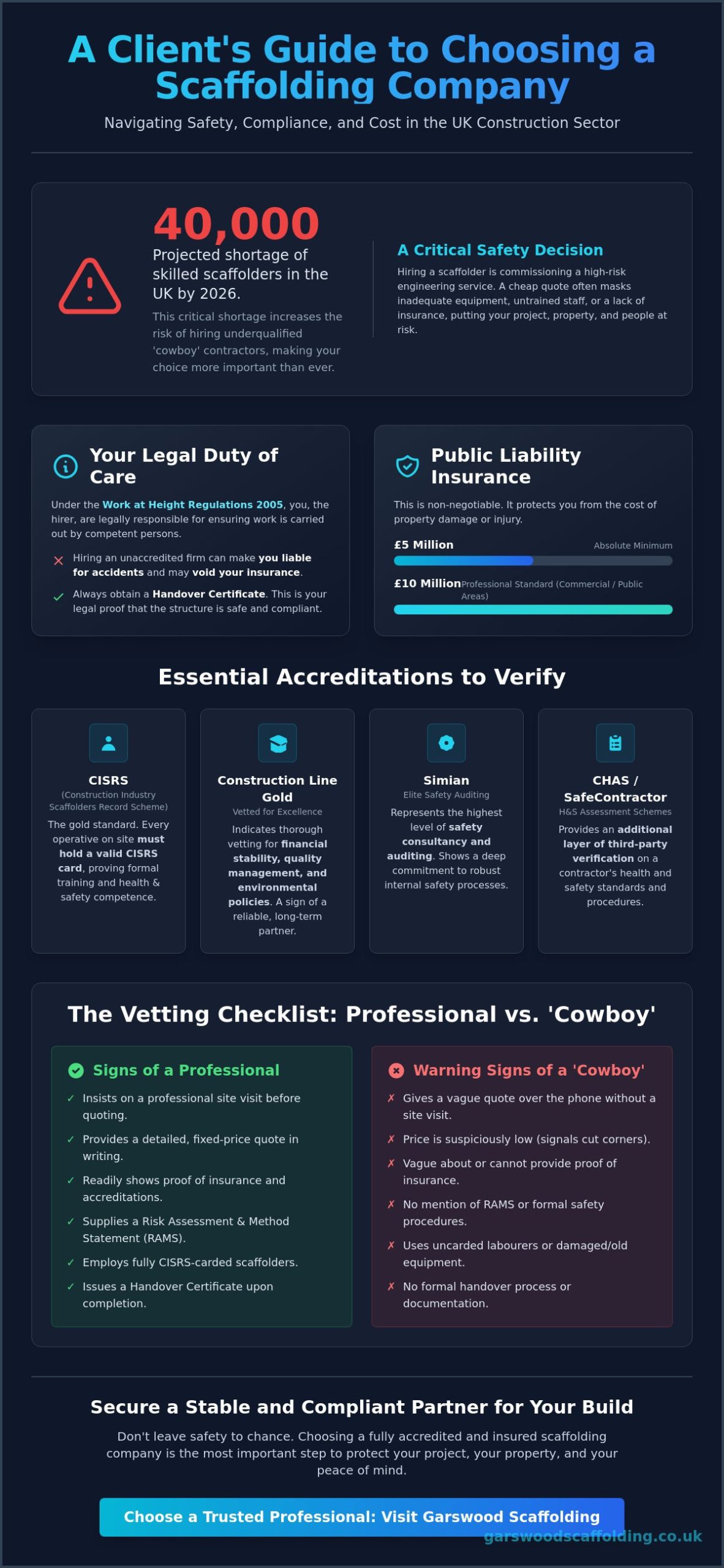
Under the Work at Height Regulations 2005, the responsibility for safety doesn’t rest solely with the contractor. As the hirer, you have a legal duty of care to ensure the work is planned and carried out by competent persons. If you hire an unaccredited firm that lacks proper safety protocols, you could be held liable for accidents on your property. This negligence can also void your home or business insurance, leaving you personally responsible for damages. A professional firm will always provide a Handover Certificate once the structure is erected, confirming it’s fit for use and compliant with industry standards. This document is your proof that the installation meets legal requirements.
Property Protection and Public Liability
Public liability insurance is a non-negotiable requirement. At a minimum, a reputable company should hold £5 million in coverage, though £10 million is often the standard for projects involving public highways or commercial sites. This protects you against the financial fallout of property damage, such as crushed gutters, broken roof tiles, or damage to a neighbour’s vehicle. Beyond insurance, a disciplined professional will provide detailed Risk Assessments and Method Statements (RAMS). These documents aren’t just paperwork; they are the blueprint for how the team will manage hazards and ensure the stability of the structure throughout the hire period. This methodical approach is essential for maintaining a safe site and protecting your local reputation amongst neighbours.
Essential Accreditations and Safety Standards to Look For
Learning how to choose a scaffolding company requires looking past the branding and into the technical oversight of the business. You aren’t just hiring a crew; you are hiring their safety record and their professional standing. In the UK, certifications act as a filter, separating established experts from those who might cut corners. Verifying these credentials is the only way to guarantee that the structure erected on your property meets the rigorous British and European standards required for high-risk work.
The CISRS (Construction Industry Scaffolders Record Scheme) is the gold standard for operative competency. Every individual on your site should hold a valid CISRS card, which proves they’ve undergone formal training and health and safety testing. A company that employs uncarded labourers for technical tasks is a significant liability. Elite firms often pursue Simian accreditation, which represents the highest level of safety consultancy and auditing in the industry. This level of scrutiny ensures that the company’s internal processes are as robust as the scaffolding they build.
Financial and operational stability is equally important, particularly for long-term projects. Construction Line Gold status indicates that a company has been thoroughly vetted for its financial standing, environmental policies, and quality management. It’s a clear signal that the business is a stable partner capable of managing large-scale requirements without the risk of insolvency or safety lapses. When you’re vetting contractors, always ask for proof of these high-level memberships.
Decoding Scaffolding Accreditations
Industry-recognised assessment schemes like CHAS (Contractors Health and Safety Assessment Scheme) and SafeContractor provide an additional layer of protection. These organisations audit a contractor’s health and safety procedures so you don’t have to. By referencing Essential Accreditations from bodies like the NASC, you can ensure your contractor meets the highest industry benchmarks. These certifications aren’t just badges; they represent a commitment to the Work at Height Regulations 2005 and the CDM 2015 standards.
Training and Competency Checks
There’s a vast difference between a basic labourer and an Advanced Scaffolder. On day one, you have the right to ask to see the qualification cards of the team working on your roof or commercial unit. This ensures that technical systems, such as safety decking or crash decking, are installed correctly by those trained in those specific products. Garswood Scaffolding Ltd maintains a rigorous commitment to these standards, leveraging 40 years of family-run expertise to provide safe, accredited access solutions across the North West. Ongoing training is a core pillar of our service, ensuring our team is always current with the latest safety innovations.
Evaluating Experience: Domestic vs. Commercial Project Requirements
Choosing the right partner depends entirely on the nature of your structure. A contractor that excels at simple residential extensions may lack the technical design capabilities required for a complex industrial unit. When researching how to choose a scaffolding company, you must evaluate their specific experience in your sector. Domestic projects often require a delicate touch to protect gardens and driveways, whilst commercial sites demand rigorous logistical planning and high-volume equipment management. A disciplined professional understands that these two environments require different skill sets and safety protocols.
Our region is rich with heritage buildings and complex terrace properties. A “one size fits all” approach is insufficient for these structures. Heritage masonry is often fragile; it requires bespoke tying solutions and careful load distribution to prevent permanent damage. Reliability also extends to crisis management. High winds or structural failures in the North West require a partner providing 24/7 emergency cover. You need the assurance that a team can be on-site immediately to stabilise a dangerous structure, regardless of the hour. While UK contractors follow the Work at Height Regulations 2005, many of the core engineering principles align with international benchmarks like the OSHA Scaffolding Safety Standards, which detail the rigorous load-bearing requirements for safe access.
Specialist Solutions for Homeowners
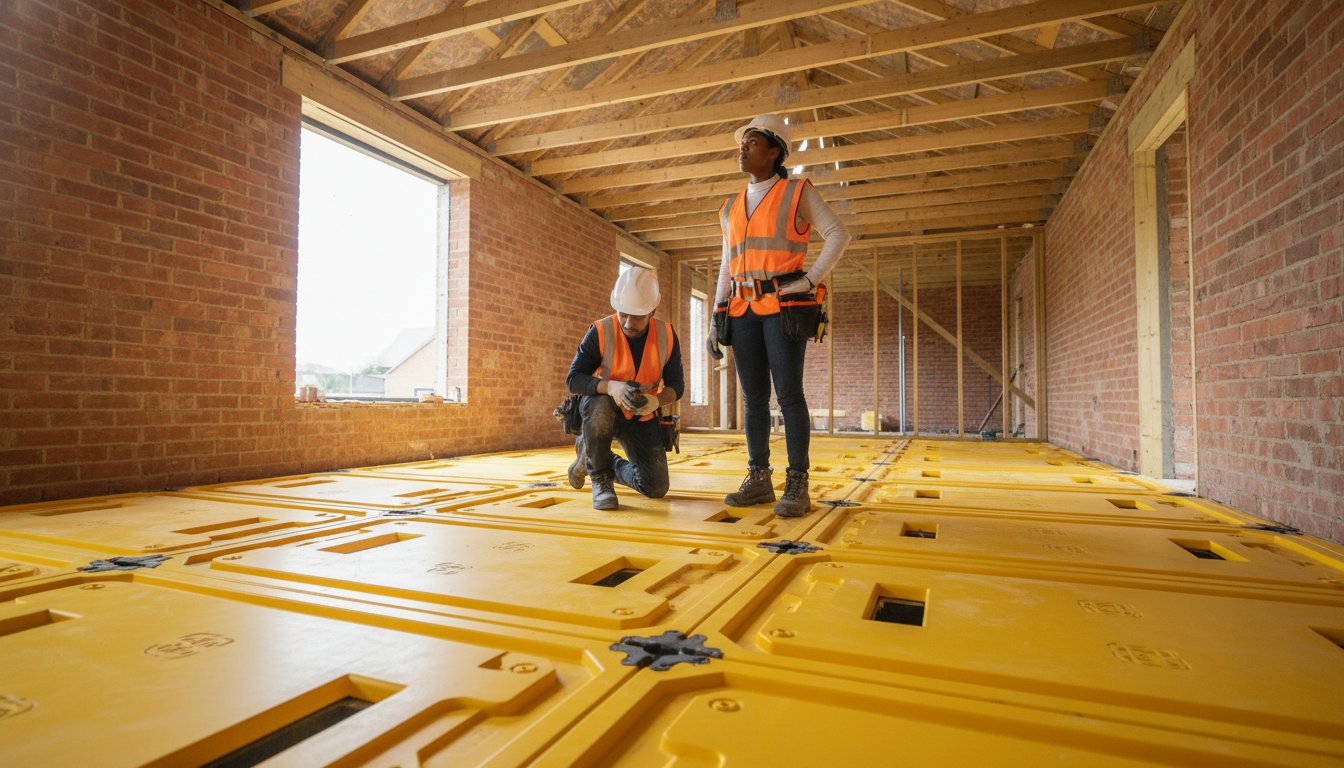
For residential projects, safety decking is often a superior alternative to traditional tube and fitting for internal work. It provides a stable platform for trades like plasterers and decorators whilst preventing falls from height. If you are planning solar panel installations or a full re-roofing, roof and edge protection are mandatory to keep workers safe. We also recommend skylight protection systems during renovations. These temporary covers prevent accidental falls through fragile roof lights, ensuring your home remains a safe work environment for all contractors involved.
Commercial and Industrial Access Standards
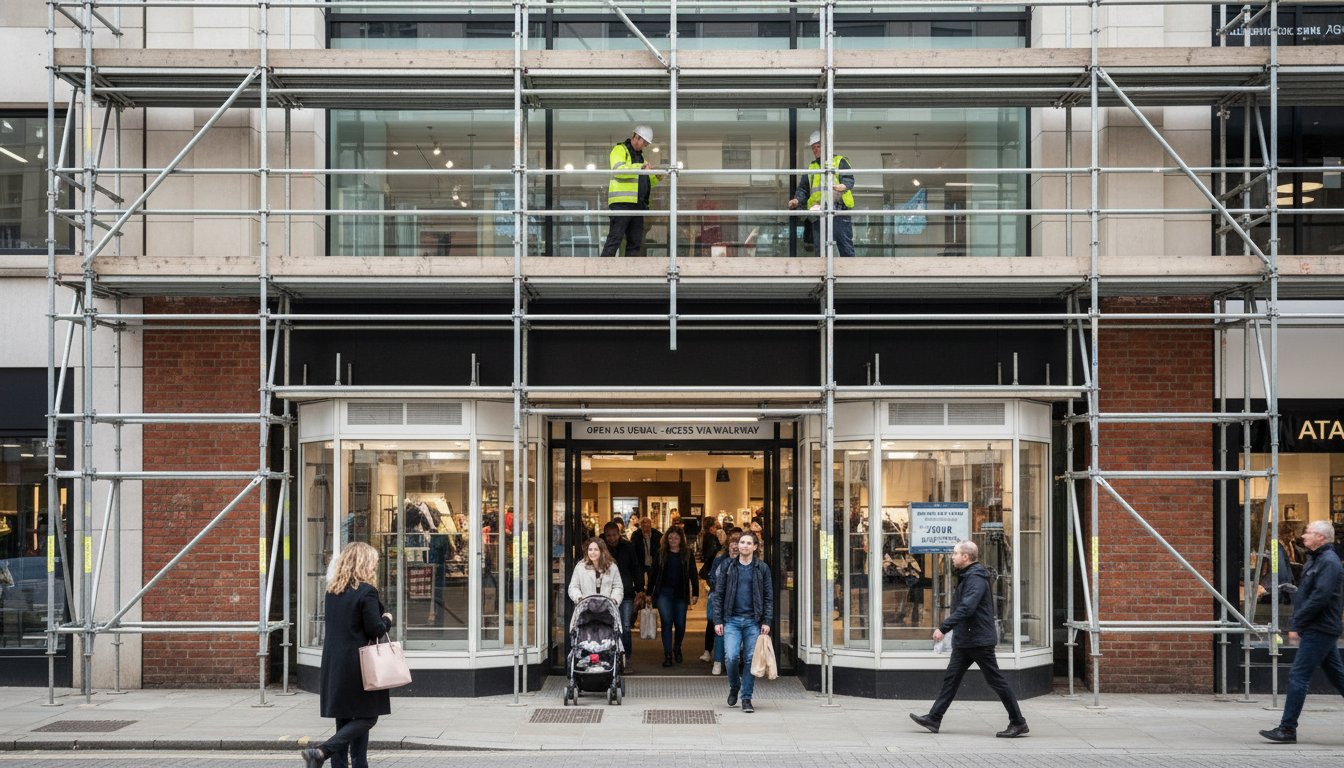
Commercial scaffolding requires a higher level of technical oversight. Projects involving large warehouses or office blocks often necessitate parapet guardrails and fall-through protection to secure open edges and roof voids. For complex structures, bespoke scaffolding design drawings are essential to ensure the platform can handle specific weight loads. Managing public risk is also a priority, especially in high-footfall areas like Wigan and Warrington town centres. This involves using debris netting, fans, and secure base plating to protect pedestrians from falling objects or tripping hazards. Every commercial installation must be a stable, precise engineering feat that prioritises public safety above all else.
The Vetting Process: Quotes, Insurance, and Avoiding Red Flags
Vetting a contractor is the most critical phase of your project planning. When you are determining how to choose a scaffolding company, the initial interaction often reveals more than the price tag. A disciplined professional will always insist on a site visit before issuing a formal, fixed-price quote. This allows them to assess ground conditions, access restrictions, and specific tying requirements that a phone conversation cannot cover. Avoiding this step often leads to “extra-over” charges later in the project, which can quickly derail your budget.
A clear, written contract is your primary protection. It should explicitly detail the costs for erection, the weekly rental rate, and the dismantling fee. You must also understand the ‘Hire Period’. In the North West, where unpredictable weather frequently causes delays to roofing and masonry work, you need to know exactly what the additional costs will be if your project overruns. Transparent pricing is a hallmark of a reliable firm that values long-term client relationships over quick profits.
Watch for immediate red flags during the initial meeting. Cash-in-hand offers are a sign of a company that likely lacks proper insurance or tax compliance. Similarly, a lack of branded vehicles or operatives arriving without full Personal Protective Equipment (PPE) suggests a lack of discipline. A company that values its reputation will invest in its appearance and the safety of its staff. These visual cues are often a direct reflection of the quality of the work they will perform on your property.
How to Compare Scaffolding Quotes
Comparing quotes requires looking beyond the bottom figure. The cheapest option often excludes critical safety features like safety decking or edge protection, which were discussed in earlier sections as essential for legal compliance. Ask for a breakdown of what is included in the base price and what is considered an “extra”. Verifying a company’s physical address and their history in areas like Wigan or St Helens ensures you aren’t dealing with a fly-by-night operation. For a transparent and detailed estimate, you can request a professional scaffolding quote from our local team.
Questions to Ask Every Scaffolding Contractor
Before signing any agreement, ask to see a current Public Liability Insurance certificate. As established, £5 million or £10 million is the industry benchmark. Confirm that every operative is CISRS qualified and ask who the designated safety officer is for your project. A professional contractor will have these details ready and won’t hesitate to provide them. This level of transparency is essential for your peace of mind and the legal safety of your build.
Why Garswood Scaffolding Ltd is the Trusted Choice Across the North West
Selecting the right partner for your project is a decision that impacts both safety and your bottom line. When you evaluate how to choose a scaffolding company, you are looking for a firm that combines technical expertise with a proven local track record. Garswood Scaffolding Ltd provides this balance through 40 years of family-run experience. We have built our reputation by serving domestic and commercial clients across Wigan, St Helens, Warrington, and Leigh with a disciplined, no-nonsense approach to high-risk work.
Our commitment to excellence is backed by the industry’s most rigorous accreditations. Garswood Scaffolding Ltd holds Construction Line Gold status and is Simian accredited, which confirms our financial stability and elite safety performance. Whether you require a simple structure for domestic chimney repairs or large-scale commercial safety decking, our team applies the same level of precision and expert knowledge to every task. This versatility ensures that we remain a “safe pair of hands” for any access requirement in the region.
Reliability is a core pillar of our service. We understand that structural failures or storm damage don’t wait for convenient hours. Our emergency response team is available to provide the necessary support when you need it most, giving you peace of mind that your property is protected. This methodical approach to safety and service is why Garswood Scaffolding Ltd is the preferred choice for contractors and homeowners alike, ensuring every structure we erect meets the highest standards of stability and compliance.
Our Local Expertise and Heritage
We have deep roots in Ashton-in-Makerfield and the wider North West community. Our local reputation is our most valuable asset; it’s built on decades of tradition, integrity, and doing things the right way. By supporting the local economy whilst maintaining the highest national safety standards, Garswood Scaffolding Ltd offers a service that is both approachable and authoritative. We treat every project with the respect it deserves, ensuring that our neighbours and local businesses receive the best possible care from a seasoned guide in the scaffolding industry.
The Garswood Safety Guarantee
Safety is not a commodity; it is a discipline. Every operative at Garswood Scaffolding Ltd is CISRS-qualified, ensuring that your project is handled by competent professionals who understand the technicalities of their craft. We invest heavily in the latest technology, including modern safety decking and fall-through protection systems, to eliminate risks on-site. Our rigorous adherence to safety benchmarks is designed to protect your project, your property, and your peace of mind. Contact Garswood Scaffolding Ltd for a professional quote today to secure an expert partner for your next build.
Secure Your Project with Professional Scaffolding Expertise
Prioritising safety and structural integrity is the most important decision you’ll make for your build. By focusing on the verified accreditations and vetting steps discussed throughout this guide, you mitigate the risks associated with unreliable contractors. Mastering how to choose a scaffolding company ensures your site remains fully compliant with UK law whilst protecting your property and the general public from avoidable damage.
Garswood Scaffolding Ltd provides the disciplined oversight and technical precision required for both domestic and commercial projects. With over 40 years of experience, Construction Line Gold accreditation, and a team of CISRS qualified operatives, we offer the stability needed to manage high-risk work safely. Our 24/7 emergency support further ensures that your project is never left vulnerable to structural instability or adverse weather conditions.
Ready to start your project with a trusted partner? Request a Professional Scaffolding Quote from Garswood Scaffolding Ltd today. We look forward to providing the safe, reliable, and cost-effective access solutions your project deserves.
Frequently Asked Questions
How much does it cost to hire a scaffolding company in the UK?
Scaffolding costs are determined by the size and height of the structure, the complexity of the project, and the length of the hire period. You’ll typically pay for the initial erection and dismantling, followed by a weekly rental fee if the project exceeds the standard hire term. It’s best to request a fixed-price quote after a professional site visit to ensure all specific safety requirements are included in the price.
Do I need a permit for scaffolding on a public pavement?
You do need a permit if any part of the structure rests on a public pavement or road. This is known as a highway licence and is obtained from your local council. Most professional scaffolding companies will handle the application process on your behalf, though the council’s fee is typically passed on as part of your overall project costs. Work cannot legally commence until this licence is granted.
What is the difference between a quote and an estimate for scaffolding?
A quote is a fixed price for a clearly defined scope of work, whereas an estimate is an educated guess that may change once the project begins. When you’re deciding how to choose a scaffolding company, you should always insist on a formal, written quote. This ensures you aren’t hit with unexpected charges for extra boards or safety features that weren’t accounted for in an initial estimate.
How long can I keep the scaffolding on my property?
Scaffolding can remain on your property for as long as your project requires, provided the structure is inspected every seven days by a competent person. Most contracts include an initial hire period, often between four and eight weeks. If your work overruns due to weather or material delays, you’ll enter a weekly rental phase. Always clarify these terms in writing before the boards are delivered to your site.
What insurance should a scaffolding company have?
A reputable firm must hold Public Liability Insurance to cover property damage or injuries to third parties. The industry standard is usually £5 million, though £10 million is often required for commercial sites or projects involving public highways. They should also hold Employers Liability Insurance to protect their own operatives whilst working at height on your premises. Never hire a contractor who cannot provide current insurance certificates.
Can I erect my own scaffolding for a home project?
Whilst there’s no law preventing you from erecting scaffolding on your own private property, it’s highly discouraged due to the extreme safety risks involved. Professional scaffolding is a complex engineering task that requires CISRS training to ensure stability. Improperly built structures can lead to collapses, severe injury, or significant damage to your home that your insurance provider will likely refuse to cover.
What is a scaffolding handover certificate and why do I need it?
A handover certificate is a document issued by the contractor once the structure is fully erected and inspected. It serves as formal confirmation that the scaffold is safe for use and complies with current UK safety regulations. You need this certificate for your own records and to satisfy your insurer that you’ve fulfilled your legal duty of care as the hirer of the equipment.
How do I know if my scaffolders are properly qualified?
You can verify a scaffolder’s qualifications by asking to see their CISRS (Construction Industry Scaffolders Record Scheme) card on day one. This card proves the operative has completed the necessary training and health and safety testing for their specific grade. When researching how to choose a scaffolding company, ensure the firm only uses carded professionals rather than untrained labourers for technical assembly tasks.



Leave A Comment